When Does the Time of Fajr Prayer Begin According to the Qur’an?
Fajr prayer is one of the five daily obligatory prayers in Islam, and its timing is clearly explained in the Qur’an. Unlike fixed clock-based schedules used in different countries, the Qur’an defines the beginning of Fajr prayer based on a natural and visible sign in the sky.
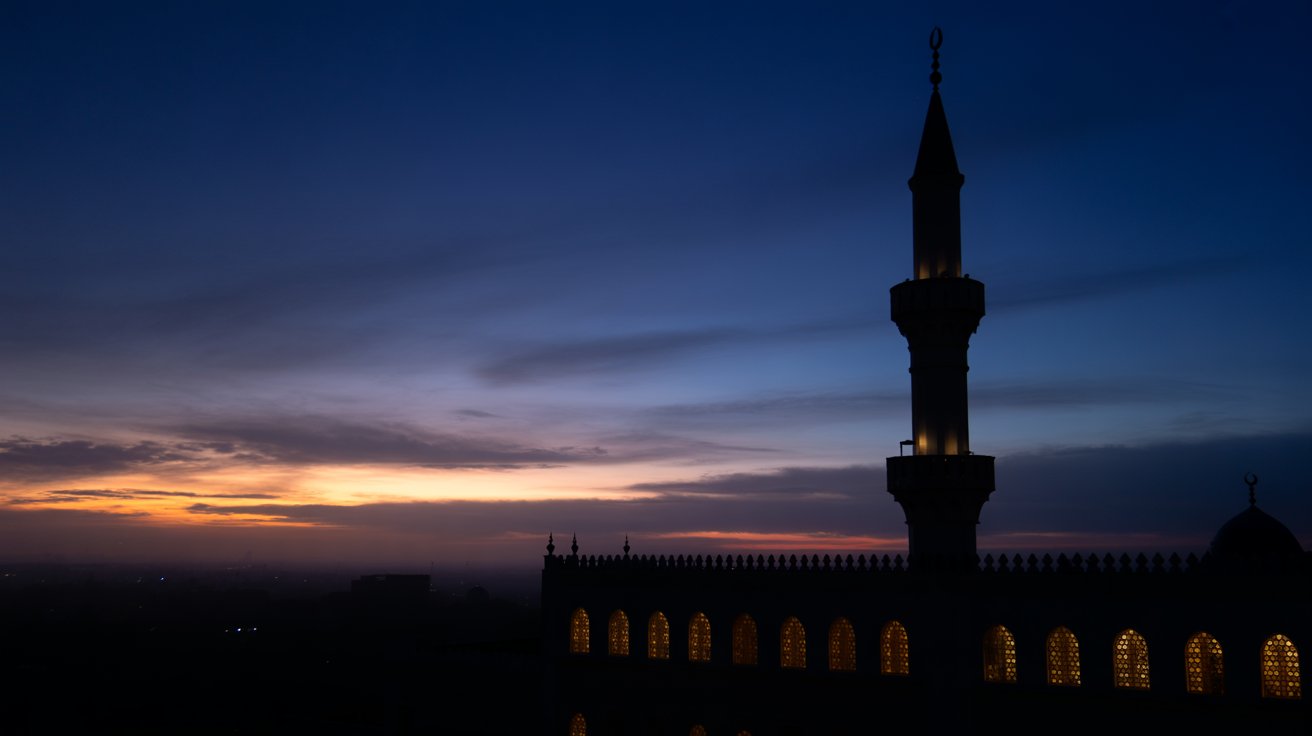
According to the Qur’an, the time of Fajr prayer begins at the appearance of true dawn. This is the moment when the first horizontal light becomes visible on the horizon, separating the darkness of night from the light of day. Before this, the darkness of night remains complete, and the time of Fajr has not yet started.
Allah Almighty says in the Qur’an:
“And eat and drink until the white thread of dawn becomes distinct to you from the black thread of night. Then complete the fast until the night.”
(Surah Al-Baqarah, 2:187)
This verse clearly explains the sign of true dawn. The “white thread” refers to the spreading light of dawn, while the “black thread” refers to the remaining darkness of the night. When these two become clearly distinguishable, the time of Fajr prayer begins.
Islamic scholars explain that this “true dawn” is not a vertical light in the sky (false dawn), but a horizontal light that spreads across the horizon. Once this true dawn appears, the night ends and the time for Fajr prayer starts.
In conclusion, the Qur’an teaches that the beginning of Fajr prayer is determined by the natural appearance of dawn, not by a fixed clock time. This makes the timing of Fajr a universal sign that applies to all places, regardless of country or region.
Understanding this Qur’anic principle helps Muslims recognize the true start of Fajr prayer based on the signs Allah has placed in nature.