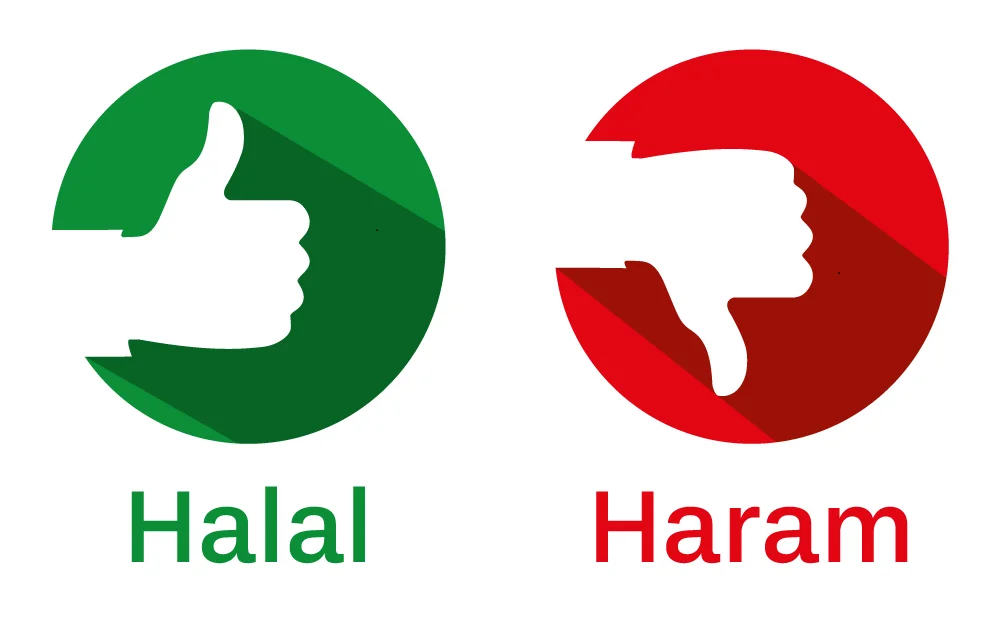
What Is the Criterion of Halal and Haram According to the Qur’an?
In Islam, Halal (lawful) and Haram (unlawful) are not decided by personal opinion, culture, or trends. The Qur’an makes it clear that only Allah has the authority to declare something halal or haram.
📖 The Fundamental Principle from the Qur’an
“Legislation is not but for Allah.”
(Surah Yusuf 12:40)
This verse establishes a clear rule:
- The right to declare something halal or haram belongs only to Allah
- No human being has the authority to change Allah’s rulings
📖 What Is Halal According to the Qur’an?
“O mankind, eat from whatever is on earth [that is] lawful and pure.”
(Surah Al-Baqarah 2:168)
According to the Qur’an, halal is that which:
- Allah has clearly permitted
- Is pure (tayyib) and beneficial
- Does not harm faith, health, intellect, or society
📖 What Is Haram According to the Qur’an?
“Forbidden to you are dead animals, blood, and the flesh of swine…”
(Surah Al-Ma’idah 5:3)
Haram refers to anything that:
- Allah has explicitly prohibited
- Causes harm, injustice, or moral corruption
- Leads to oppression, immorality, or social disorder
⚖️ The Qur’anic Standard of Halal and Haram
| Aspect | Explanation |
|---|---|
| Authority | Allah alone |
| Source | Qur’an (and authentic Sunnah) |
| Purpose | Human well-being and justice |
| Flexibility | Not subject to personal desires |
🚫 Declaring Halal and Haram Without Allah’s Permission
“And do not say falsely, ‘This is lawful and this is unlawful,’ inventing lies about Allah.”
(Surah An-Nahl 16:116)
This verse is a strong warning that:
- Declaring something halal or haram without evidence is a serious sin
- Changing Allah’s rulings leads to misguidance
📌 Key Lessons
- Whatever Allah has declared halal remains halal
- Whatever Allah has declared haram remains haram
- Islam does not allow adding to or subtracting from divine law
🤲 Conclusion
According to the Qur’an, the criterion of halal and haram is only Allah’s command.
✔️ The role of humans is to obey
❌ Not to modify or redefine divine limits
This clear principle protects faith, justice, and moral balance in society.